

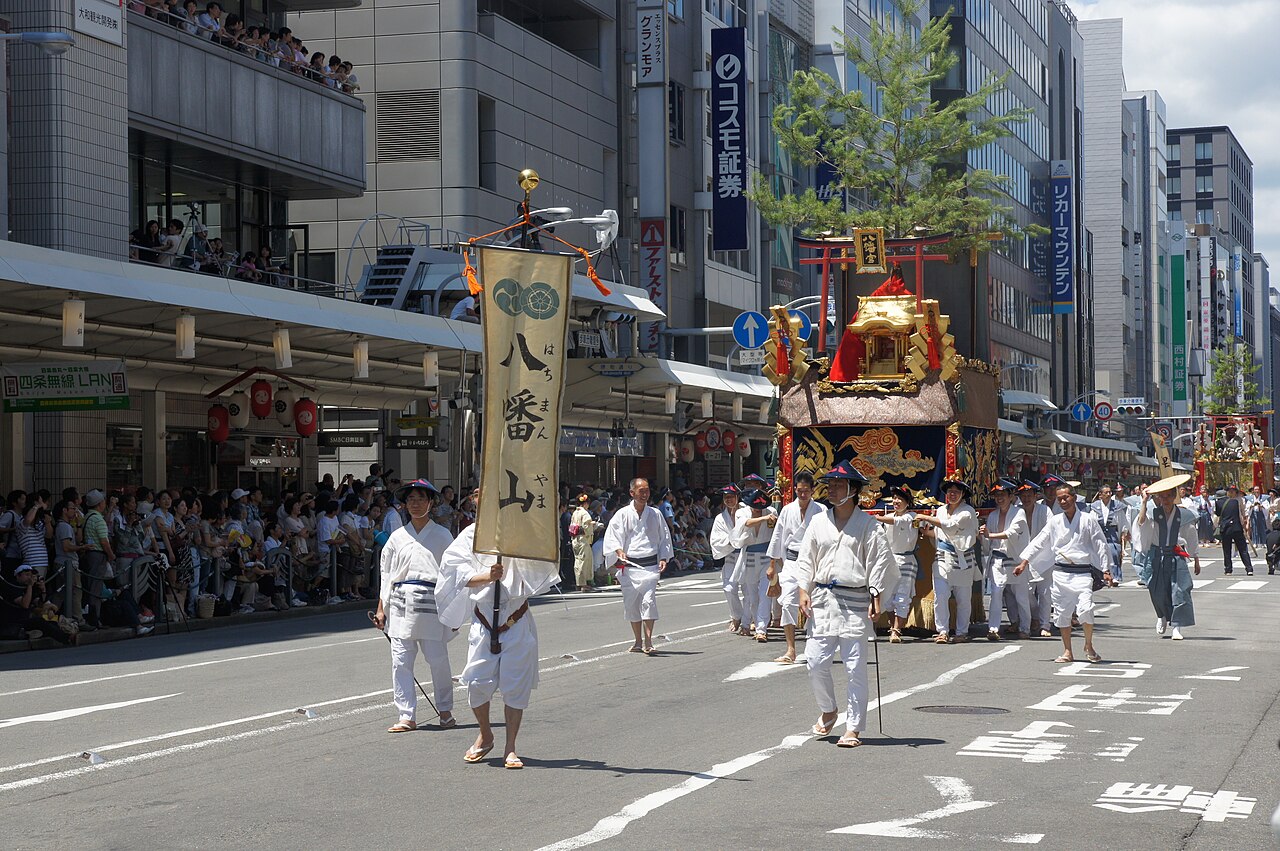
The Kansai region is home to some of Japan’s most famous and historic festivals. Many of these celebrations have been taking place for centuries, combining religious traditions with spectacular parades, music, and community events. Whether you visit in summer, autumn, or early spring, Kansai offers plenty of opportunities to experience Japanese culture at its most colourful and authentic.
Gion Matsuri (Kyoto)
Held throughout July, Gion Matsuri is Kyoto’s most famous festival and one of Japan’s largest. It began in 869 as a religious ceremony to pray for protection from disease and disaster.
The festival is best known for its enormous, beautifully decorated wooden floats, some weighing several tonnes, which are pulled through the streets during the grand Yamaboko Junko processions. Visitors can also enjoy lively evening celebrations, traditional food stalls, and streets filled with locals wearing yukata.
Tenjin Matsuri (Osaka)
Taking place on July 24-25 each year, Tenjin Matsuri celebrates the deity of scholarship enshrined at Osaka Tenmangu Shrine. With origins dating back over 1,000 years, it is considered one of Japan’s three greatest festivals.
The celebrations include colorful land processions featuring people dressed in traditional costumes, followed by a spectacular river procession of illuminated boats along the Okawa River. The festival ends with an impressive fireworks display that lights up the Osaka skyline.
Jidai Matsuri (Kyoto)
Jidai Matsuri, or the “Festival of the Ages”, is held every year on October 22 to commemorate Kyoto’s long history as Japan’s imperial capital.
Its highlight is a magnificent historical parade featuring around 2,000 participants dressed in authentic costumes representing more than 1,000 years of Japanese history. Beginning at Kyoto Imperial Palace and ending at Heian Shrine, the procession showcases famous historical periods, warriors, nobles, artisans, and imperial attendants.
Omizutori (Nara)
Held every March at Nigatsu-do Hall within Todai-ji Temple, Omizutori is one of Japan’s oldest religious ceremonies, having been performed annually since 752 without interruption.
The most dramatic part of the event sees monks carrying enormous flaming torches along the temple balcony after dark. Sparks shower over the crowds below, and many people believe being touched by them brings good health and protection. The ceremony concludes with a sacred water-drawing ritual that gives the festival its name.
Nagahama Hikiyama Festival (Shiga)
Shiga Prefecture is known for several traditional Hikiyama festivals, where communities pull beautifully crafted wooden festival floats through historic streets. Among the best known is the Nagahama Hikiyama Festival, held each April.
Many of the floats serve as travelling stages for performances of traditional kabuki theatre by local children, a rare custom that has been preserved for centuries. The combination of elaborate craftsmanship, music, and community participation makes these festivals a highlight of Shiga’s cultural calendar.
Nachi Fire Festival (Wakayama)
Held annually on July 14 at Kumano Nachi Taisha in Wakayama Prefecture, the Nachi Fire Festival is one of Japan’s most dramatic religious events.
The festival features giant burning torches, each weighing around 50 kilograms, carried by participants dressed in white. The flames symbolically purify the route for portable shrines as they make their way toward the famous Nachi Waterfall, one of Japan’s tallest waterfalls. The powerful combination of fire, sacred ritual, and natural scenery creates an unforgettable spectacle.
Z3144228, CC BY-SA 4.0, via Wikimedia Commons


