

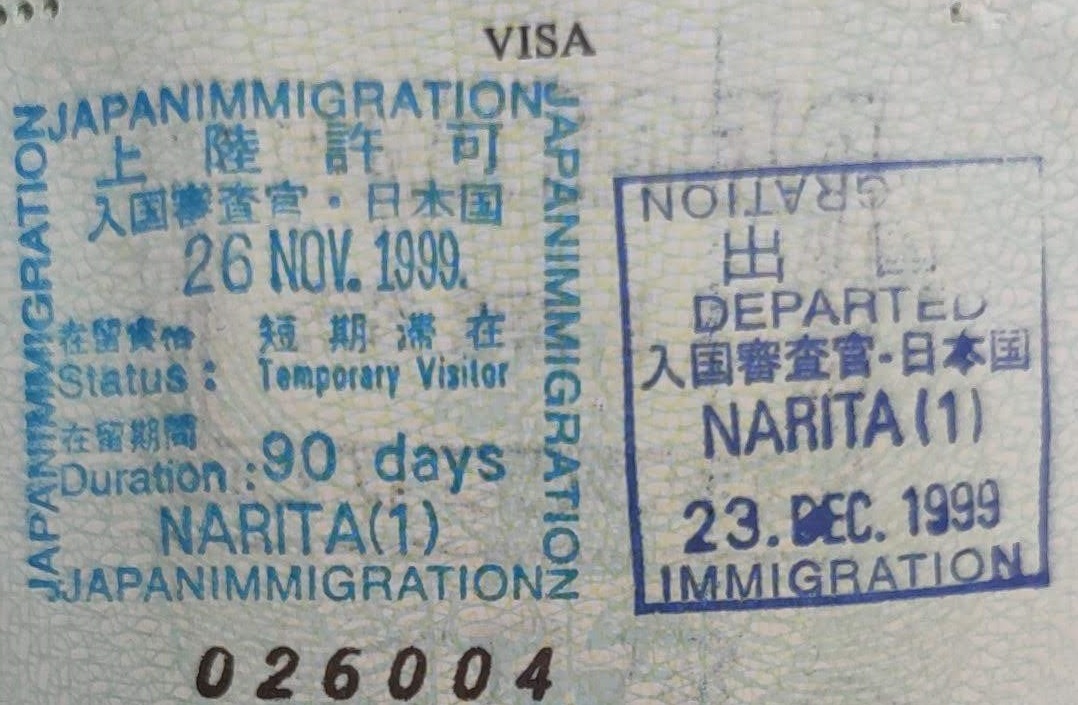
If you are coming to Japan and plan to stay longer than 90 days, you will need some type of a visa obtained through a Japanese consulate in your home country.
Visa Process
The standard way to obtain a working visa for Japan is to apply for a Certificate of Eligibility (COE) in Japan. Since the COE is application is submitted to the immigration bureau in Japan, either your company or a visa and immigration services provider will make the application on your behalf. The COE is a document that certifies that you are eligible to receive a long-term visa.
Once you have your COE, which usually takes one to two months after you submit the application (although it may take up to three months or more), you will be able to obtain a visa through a Japanese embassy or consulate in your country of residence. This process takes another two to four weeks.
If you don’t have your COE by the time you are due to leave to start your assignment, or you don’t have time to obtain your visa through an embassy or consulate before your departure, you have the option of entering the country on a temporary visitor visa (the status business travelers and tourists receive). You’ll then be able to change to your long-term visa once your COE has been issued.
Types of Visas
After you have your COE, you have several options for a long-term visa, depending on what activities you intend to do in the country.
Work Visa
To apply for a regular work visa, you need to have a bachelor’s degree (or equivalent), a diploma from a Japanese vocational school, or at least 10 years’ work experience in your field. You also need to have a job lined up or be relocating with your current job, as your company needs to sponsor you for the visa.
You’ll receive a visa for either three months, one year, three years, or five years (although one year is the most common). You’ll retain the visa regardless of whether you continue working for the company, although you may need to repay the sponsor for the visa if you quit your job soon after you start working, depending on the terms of your contract.
Also available is the specified skilled worker (SSW) visa, which the Japanese government introduced in 2019. It’s available to workers who have occupational skills that fall into 16 industrial fields, including nursing care, construction, agriculture, manufacture of food and beverages, shipbuilding, and cleaning management.
Lastly, there’s the digital nomad visa, which is a type of designated activities visa. It allows you to live in Japan for up to six months (with no extension available), provided you are from one of the eligible countries and earn at least 10 million JPY annually.
Student Visa
It’s more difficult to obtain a student visa in Japan than in many countries due to the financial requirement. You (or your sponsor) will need to prove you have around 2 million yen in your bank account or available through scholarships. Apart from this, though, you only need an offer of admission from a school in Japan. You’ll have the right to work up to 28 hours a week in the country — the exception is if you have a cultural activities student visa, which doesn’t allow you to earn any income.
Working Holiday Visa
Working holiday programs are available to people from 32 countries and regions between the ages of 18 and 30. You are allowed to work in any capacity to fund your travels, except at bars, cabarets, nightclubs, and gambling establishments.
Resident Registration
All foreign residents who possess a visa entitling them to reside in Japan for more than 90 days receive a Residence Card, either upon entry into the country or from the immigration bureau after arrival. They must register as a resident in the district where their house or apartment is located. You can only complete this procedure once you have moved into your permanent residence and are in possession of a valid long-term visa and Residence Card — it is not possible to open a bank account, sign up for a mobile phone, or enter into any other kind of contract until you’ve completed this procedure.
When registering, you will need to provide documentary evidence to prove your familial relationships. Bring your marriage certificate and the birth certificates of any accompanying children with you when you relocate.
Re-Entry Permits
If you leave Japan and do not return within one year, you will not be able to re-enter on the same visa (assuming it is still valid), unless you obtain a re-entry permit before departure. You can obtain a re-entry permit from the immigration bureau. Anyone who wishes to return to Japan after an absence of more than one year and who does not have a re-entry permit needs to apply for a visa again from scratch.
Arikevin, CC BY-SA 4.0, via Wikimedia Commons


