

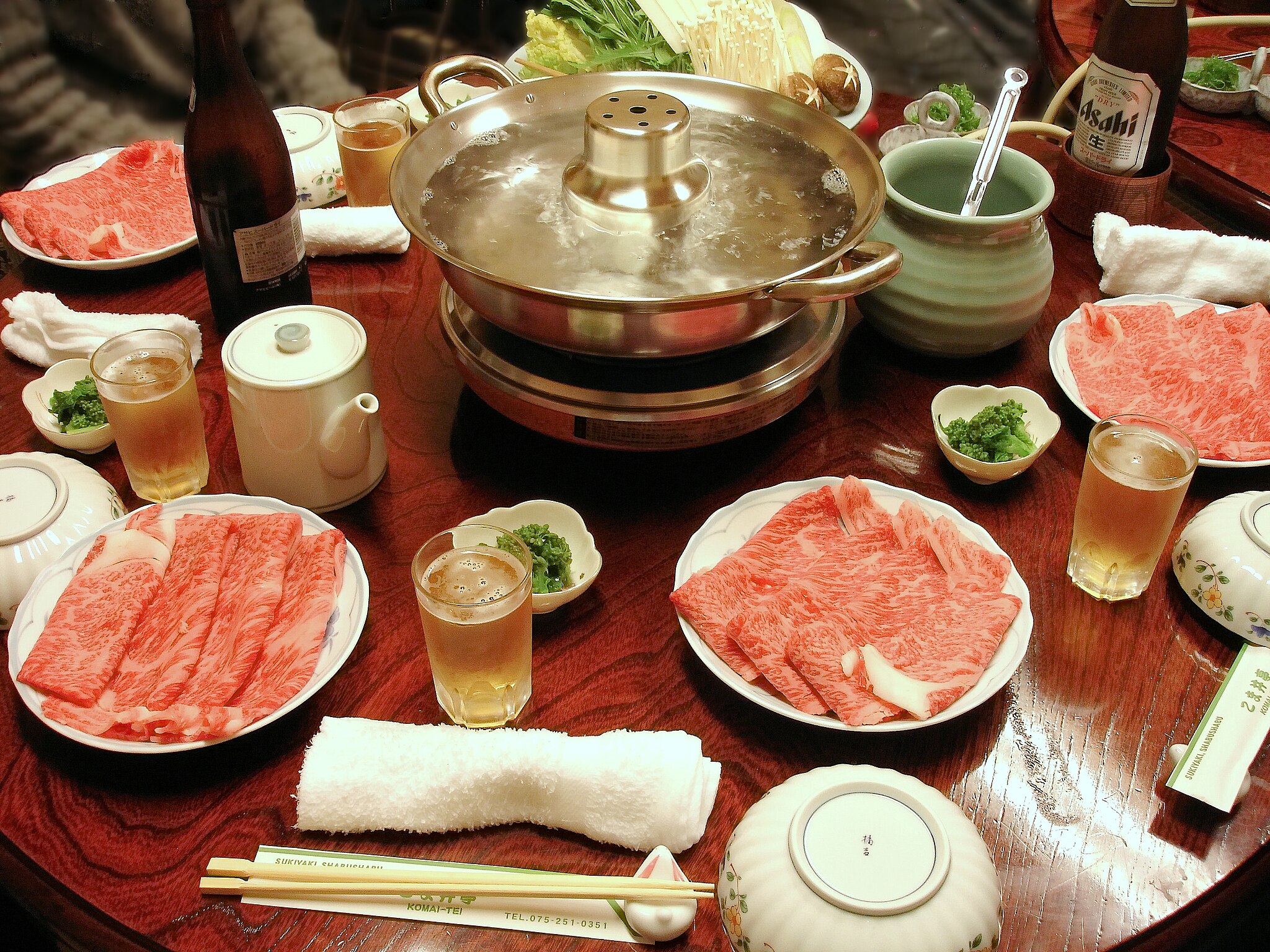
As an American, there are certain foods that I look forward to when things start getting chilly. Most of those foods, like a roasted turkey or pumpkin pie, are simply not that easy to come by in Japan. So, what’s a person to do when you want something warming and hearty on a cold, winter’s day? Luckily, Japanese cuisine has it covered with a large selection of foods that are hearty, healthy and warming. And, being Japan, it is all delicious. It is so good, in fact, that winter food in Japan is something that many Japanese look forward to all year round. This is just a quick look at what can be enjoyed in this coldest of seasons.
Nabe
Not being insulated, Japanese homes tend to get cold in winter, so one of the most popular dishes is one that the whole family can crowd around to keep warm. By far and away the most popular is the hot-pot dish ‘nabe’ or ‘nabemono’ (literally ‘things in a pot’). A nabe is actually a large cooking pot, into which a variety of ingredients such as fish, seafood, meat, and vegetables can be simmered in a ‘dashi’ or broth. The dish is cooked on a gas stove around which the family can gather, taking from the bowl and adding more as they go.
There are various kinds of nabe, with some of the most popular (and delicious) including:
- Motsunabe – a succulent beef or pork brew with cabbage and chives.
- Kimchi Nabe – Korean-influenced with spicy fermented cabbage.
- Yosenabe – with meat, seafood, vegetables, tofu, and egg.
Other variations of nabe cuisine include shabu-shabu. This is another hotpot dish prepared on a gas stove but, unlike nabe dishes, each item is cooked individually by stirring it through boiling water. It is from this action that the dish gains its onomatopoeic name as you swish it one way (shabu) and then the next (shabu). The cooked ingredients, which commonly include pork strips and a range of vegetables, are then dipped in a vinegar ponzu.
Another variation is sukiyaki, which involves a sweeter broth mix of soy sauce, sugar, and mirin, and where ingredients are dipped in raw egg rather than ponzu.
Yudofu
This is simple Japanese winter cuisine, yet popular. At its essence, it’s tofu boiled in a kombu (kelp) dashi broth. However, you can add a variety of condiments to mix the flavor. Common additions include ponzu, soy sauce, green onions, grated ginger, daikon, sesame seeds, or chili oil.
Oden
Another warming dish, and a huge winter favorite. You may have noticed it in the convenience stores in the big wooden pots near the cashier. Often sold by street vendors, this dish features a variety of ingredients, such as egg, tofu, konnyaku yam cake, daikon radish, and chikuwa fishcake. These are stewed for hours in a soy sauce based broth.
Yakiimo
Yakiimo is, as the name suggests, baked potato. However, this is no ordinary baked potato, but rather the super sweet, purple on the outside, yellow on the inside, Japanese potato. To the older generation, there is nothing to signal the coming of winter quite like the plaintive call of the yakiimo seller, wheeling his cart, singing his arrival “yakiimo, ishi yakiimo”. Nowadays you are most likely to find yakiimo at festivals or at vendors outside supermarkets, but you may still find them sold from the back of vans where they are wrapped in newspaper ready to be devoured; A creamy, sweet, and true taste of traditional Japanese winter.
Tonjiru
This is a satisfying pork miso soup that you can find in many restaurants or make in your own home. All you need is a miso-based broth, to which you can add pork strips and root vegetables such as carrots and daikon. Some variations also include spring onions, tofu, sweet potato, or mushrooms. It’s like a loaded miso soup that can be enjoyed at any Japanese mealtime in winter.
Fugu
This last one isn’t exactly a dish that one immediately thinks of in winter, however it is something of a seasonal treat that is best tried at this time of year. Fugu, or blowfish, is famous in the west for being a deadly delicacy, but handled correctly (by chefs that have gone through many years of training), and keeping away from the poisonous liver, it is a delicious dish. In winter, there are many places where you can enjoy a full course, starting with fugu sashimi, deep fried fugu ‘karaage’ and finally – as it is winter after all – fugu nabe. It is highly recommended and delicious, however ensure that you are dining at a reputable, licensed restaurant. Do not try this at home!


