

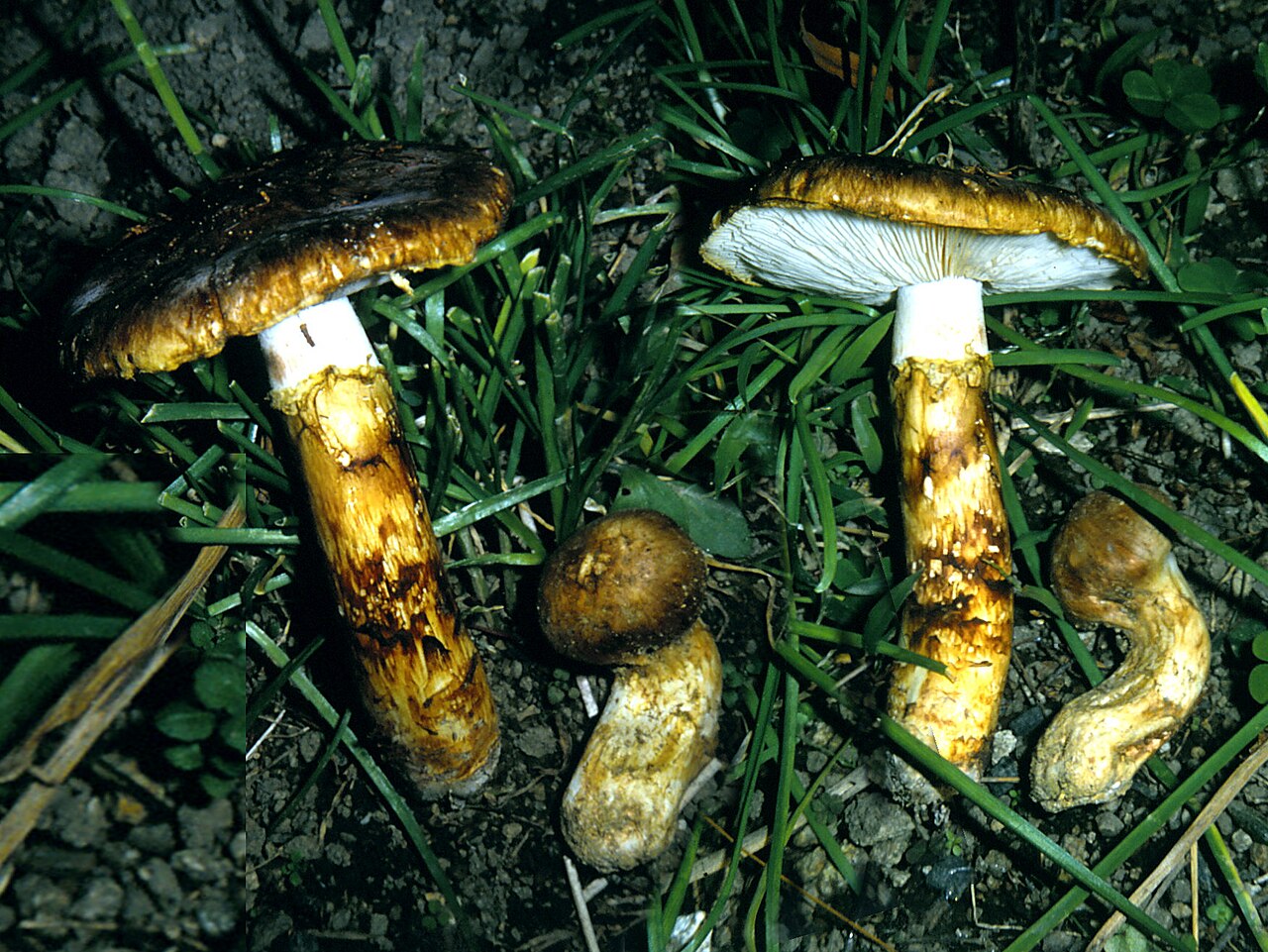
Just about everyone has seen matsutake mushrooms in the supermarket during the fall. These are not the grown-on-top-of-a-bottle, en-masse, 100-yen variety of mushrooms; these are mushrooms that leave the uninitiated wondering: what kind of mushroom could possibly be worth 2,000 yen or more? Let’s explore why.
What are Matsutake Mushrooms?
Next time you see a matsutake mushroom, pick one up and smell it. They are very fragrant, with a spicy or cinnamon flavor and a piney undertone. They are often equated to truffles in their capability to add a distinct (and delicious) flavor to dishes. Plus, like truffles, matsutake mushrooms are not produced on farms. They grow out in the wild in red pine forests. Although easy to pick, they are hard to find due to their declining habitat, which has been under attack for over a century by the invasive pinewood nematode, introduced from North America.
The price of matsutake mushrooms varies tremendously. As domestic demand routinely outstrips supply, you can often find much cheaper imported varieties that may come from nearby China or even as far away as the Pacific Northwest in the U.S. While still not cheap, the price still pales in comparison to high-grade, locally harvested varieties that may run as much as 25,000 yen each.
Matsutake Mushroom Risotto
If you are interested in preparing this autumn treat for yourself, consider this recipe for matsutake risotto. It doesn’t require a lot of mushrooms and makes for a great appetizer.
- 4 cups kombu dashi
- 1 teaspoon kosher salt
- 1 tablespoon minced shallots
- 6 ounces fresh matsutake mushrooms, thoroughly cleaned
- 2 tablespoons unsalted cultured butter
- 2 tablespoons olive oil
- ¼ cup sake
- 5 ounces Carnaroli rice
- 2 tablespoons panko (Japanese breadcrumbs)
- ½ ounce parmigiano reggiano, grated
- 1 tablespoon unsalted cultured butter
Preparation
Soak an 8-inch x 2-inch piece of dashi kombu (dashi kelp) in cold water overnight or reconstitute powdered dashi in water according to the package directions to make 4 cups of kombu dashi. Put the dashi and salt into a saucepan and heat until steam rises from the surface. Cut the stem from the cap of the mushrooms. Julienne the stems into matchsticks. Slice the caps into ⅛-inch thick pieces.
Cooking Instructions
Heat a large nonstick frying pan with 1 tablespoon of the butter and 1 tablespoon of the olive oil until hot. Add the shallots and julienned matsutake stems and cook until the butter is browned and the mushrooms become a light-brown color. Add the rice and fry for a minute, stirring to coat each grain of rice.
Add the sake, stirring until it has evaporated. Then, add two ladles of dashi. Stir constantly until most of the liquid has been absorbed. Continue adding dashi, one ladle at a time, stirring constantly until the rice achieves the texture you want. Stop at about 3½ cups for al dente risotto.
While the risotto is cooking, heat a second pan and add the remaining 1 tablespoon of olive oil. Fry the matsutake caps until they are browned and season lightly with salt and pepper. Transfer the mushrooms to a plate, then add the remaining tablespoon of butter. Add the panko and toast the breadcrumbs in the butter, stirring constantly until they are golden brown. Transfer to a plate and set aside.
When the risotto is done, add the cheese and butter, stirring until they are incorporated. Add more salt if necessary. Plate the risotto, and top with the sautéed matsutake caps and toasted breadcrumbs.
Eating Matsutake Mushrooms in Restaurants
If you’d prefer a chef to prepare your matsutake mushrooms for you, check the menus of high-end restaurants. You’ll often find dishes featuring the mushrooms in upscale establishments in places like Tokyo and Kyoto between September and November.
The most common dish you’ll encounter with matsutake mushrooms is dobin mushi. A soup made of seafood and mushrooms, it is prepared in a ceramic bowl called a dobin and poured into a small cup to serve. Some restaurants add pike conger (called hamo) to the soup.
Other dishes that use matsutake mushrooms include a seasoned rice called matsutake gohan and chawanmushi, a steamed egg custard with matsutake as well as chicken, shrimp, or ginkgo nuts.
The price of matsutake mushrooms may be off-putting, but you should definitely try them at least once during your time in Japan. Don’t let another season pass you by without ordering a dish or preparing the mushrooms yourself!
Japonica, CC BY-SA 4.0, via Wikimedia Commons


