

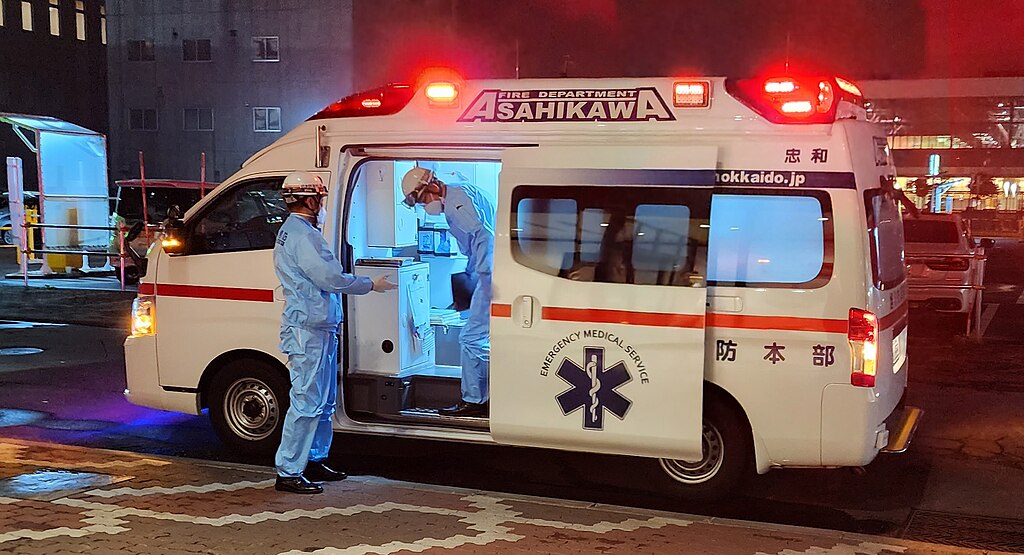
Japan has a top-of-the-range medical system and one of the longest lifespans in the world. Great news for expats relocating to the country. But how do you go about accessing this fine Japanese healthcare, and what does it cost? Like many countries, Japan operates a system of health insurance, where citizens and residents make regular contributions in return for free or subsidized healthcare. Here’s an overview of how it works.
The Japanese Healthcare System
Japan has a hybrid healthcare system consisting of both public and private provision. It’s funded by taxes and compulsory public health insurance contributions, topped up with private insurance and out-of-pocket payments. Each region has its own citizen health insurance fund, overseen by the national Ministry of Health, Labor, and Welfare (MHLW).
The public health insurance scheme covers a large proportion of costs, as well as paying for medical care for low earners and those unemployed. Many residents, including expats, take out private health insurance to cover additional costs as well as services not available through the public system.
Public Health Insurance in Japan
All permanent residents as well as those living in Japan for longer than three months need to enroll for public health insurance. Those without coverage have to pay full costs for any medical treatment they receive, and may well be refused non-urgent treatments. There are essentially three public schemes:
- Employment-based health insurance – covers must full-time employees in Japan
- National health insurance (NHI) – covers those under 75 who are not full-time employed
- Health insurance for senior citizens – covers retired residents aged 75 and over
In all three of these schemes, residents make regular (e.g., monthly) contributions that cover the majority of public healthcare costs. This includes:
- General practitioner (GP) visits
- Hospital care and specialist treatment
- Prescription drugs
- Most dental care
- Preventative screenings
If you are employed in Japan, your employer will usually arrange your health insurance for you and deduct your contributions from your salary. If you need National Health Insurance or senior citizens coverage, you should do this yourself by visiting your local municipal office. You’ll need to bring along an official ID and your Japanese social security number (MyNumber).
Private Health Insurance in Japan
Private insurance in Japan exists mainly as supplementary coverage to the public scheme. Over 70% of the population has private health insurance. You can purchase private insurance to cover the portion of costs not covered by the public scheme, as well as to access healthcare not covered through the public system – for example, mental healthcare services such as psychotherapy. Short-term visitors to Japan will usually need to purchase private medical insurance as part of their visa application.
Other advantages to private health insurance include wider access to English-speaking services and shorter waiting times. However, it is more costly.
There are numerous private health insurance providers in Japan. The Financial Services Agency regulates the sector and provides a list of licensed companies. These include insurers offering international medical coverage, such as Allianz and Cigna Global.
Health Insurance Costs
Contribution rates for employment-based public health insurance are typically around 10% of gross salary, split equally between employer and employee – so workers will contribute around 5% of their monthly pay packet. NHI and older adult insurance premiums are generally based on factors such as income, age, health, and whether coverage is individual or household. The MHLW regulates costs and caps monthly copayment limits.
Private health insurance costs vary depending on level of coverage and risk factors, such as age, health, and lifestyle. In general, you can expect to pay between 25,000 – 65,000 yen a month.
LR0725, CC BY-SA 4.0, via Wikimedia Commons


.jpg)