

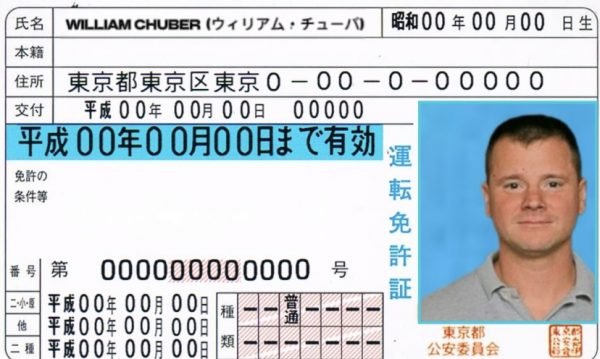
To drive legally in Japan, you have two options: obtain a Japanese license or use an International Driving Permit (IDP).
- Your IDP must be issued by a signatory country of 1949 Geneva Convention on Road Traffic. There are 102 countries who have signed this, as of March 2, 2025, with notable exceptions including Brazil, China, and Mexico.
- You can gain a Japanese driver’s license without taking the written and practical exams if your license is from one of the more than 20 countries or one of the U.S. states that has a bilateral agreement with Japan. You will need to have held your license for at least three months. If you are not from one of these countries or states, you will need to take the driving tests.
Of course, if you want to drive in other countries than Japan and your home country, an IDP is the way to go.
Obtaining an IDP
You need to obtain an IDP in your home country. If you’ve already arrived in Japan, don’t worry—it’s still possible!
The first way to gain your IDP is to visit a branch in person. You should download and fill out your application in advance, but you can often take the two passport pictures you need at the branch office. You’ll also need to present your license and pay a permit fee (the amount depends on your country of origin).
Your second option is to apply by mail. This allows you to apply for the IDP from anywhere in the world. Mail your completed application form along with two passport photos (signed on the back), the permit fee, and a photocopy of both sides of your license. However, this option may come with risks (see below).
What to Do If You Have a Japanese Driver’s License
Alternatively, you can apply and receive an IDP while in Japan if you have plans to travel to another country. You can get an IDP using your Japanese driver’s license. The permit is valid for one year from the date of issue and must be used in conjunction with your Japanese license. The process generally takes one hour and requires a visit to a license center within the prefecture where you live.
License centers may offer this service only at specific times or on certain days. Although the requirements remain the same, procedures at each license center will vary.
You will need:
- Your Japanese driver’s license
- Proof of overseas travel as a printed airline ticket, your passport, and a photocopy of your passport (ID page)
- One photo, about 5.0 cm x 4.0 cm (photos for a fee can be obtained from the machine at license center)
- Inkan (this isn’t necessary for non-Japanese, but if you have one it is handy)
- 2,350 yen
At the license center:
- To pay for your application, ask for a Kokugai Menkyo (国外免許).
- Fill out your application. There may be sample applications available to help you.
- Turn in your completed application, along with your license, passport, and photo at the correct window.
- Wait around 15 to 20 minutes for someone to call your name at the window.
- Receive your IDP, license, and passport. You will need to stamp the application form with your inkan to show you have received it. If you do not have an inkan, you will need to sign it with your name.
Rule Changes Since 2002
Many people, especially those who came to Japan before 2002 are unaware that they are driving on an invalid IDP and are in danger of suffering fines, jail time, or even deportation if they are discovered during a routine traffic stop.
Before 2002, you could renew your IDP repeatedly with a valid overseas license, instead of formally applying for a Japanese driver’s license. But, after the law changed, the use of an IDP became limited to:
- One year maximum from first arrival in Japan
- Drivers returning to Japan after being out of the country for at least three months
After your IDP expires, you must convert your foreign license to a Japanese license. You may not renew it unless you leave the country again for at least three months.
Though this law changed more than 20 years ago, the information has still not completely filtered out to the foreign communities of Japan, with many people risking penalties of up to one year imprisonment, loss of employment, or deportation every time they get behind the wheel.
2011 saw two high profile drivers arrested for driving without a license in Japan in situations involving invalid IDPs.
Japanese golf star Ryo Ishikawa was the first. Ryo Ishikawa was named Sports Illustrated’s Sportsman of the Year for promising to donate all of his golf earnings for 2011 to support relief projects related to Japan’s recent devastating tsunami.
The award and the golf pro’s notoriety did not help when he was caught driving on an invalid IDP—he was arrested and charged. Ishikawa had acquired a United States driver’s license and IDP while playing in the U.S., but he failed to notice that an IDP only continues to be valid if the license holder has been outside of Japan for more than three months.
The second arrest of 2011 was “that foreign guy from the Softbank commercials with the cute dog,” which is how most people in Japan know American actor Dante Carver.
Carver was stopped in Shibuya after making an illegal U-turn. When asked by police for his license, he produced an invalid IDP and was arrested. Having lived in Japan since 2005, he was well beyond the legal limit for driving with an IDP. It appears that he had been renewing his IDP and continuing to use it, unintentionally breaking the law.
Legal Advice
The law seems cut and dry on paper, but the advice provided is often confusing.
The United Kingdom and New Zealand embassies in Tokyo both recommend that their citizens living in Japan abide by the rules as written and utilize an IDP for no more than their first 365 days in Japan.
The U.S. and Australian Embassies advise their citizens to use an IDP in Japan for no longer than 90 days if on a tourist visa and not at all for those residing in Japan.
The differing advice is related to comments by police officials in Japan that they prefer an IDP be used only by visitors to Japan, rather than residents. While the rule is written clearly, it is interpreted differently throughout Japan.
The U.S. embassy advises its citizens that:
“Residents” are expected to convert or obtain a Japanese driver’s license. Persons using an international driver’s license who are a resident in Japan can be subject to fines or arrest. The exact boundary between “resident” and “not resident” is unclear. In practice it seems to involve more than simply visa status or length of stay in Japan and is determined by the police.
We have heard from several Americans who were told by the police that using an IDP after exiting and then returning to Japan, when you are residing in Japan, after you have obtained an Resident Card, or after 90 days in Japan or using a license obtained by mail is illegal. In two instances, following accidents, Americans were charged with driving without a license—a serious offense.
Driving without a license may also void your insurance coverage.
The Australian embassy advises its citizens that:
Australians can drive in Japan on an International Driver’s Permit (in conjunction with your Australian driver’s license) up to 365 days following their initial entry into Japan. However, local authorities expect anyone who is residing in Japan (i.e. those not on a 90-day temporary visitor entry visa) to drive with a Japanese license, not an International Driver’s Permit.
The safest option is to convert your foreign driver’s license to a Japanese license immediately.
While the law gives you a grace period of one year, in practice you could be cited anyway. When you consider that a conviction for driving without a license will void your insurance coverage as well, driving on an IDP as a resident is simply too much risk.


