

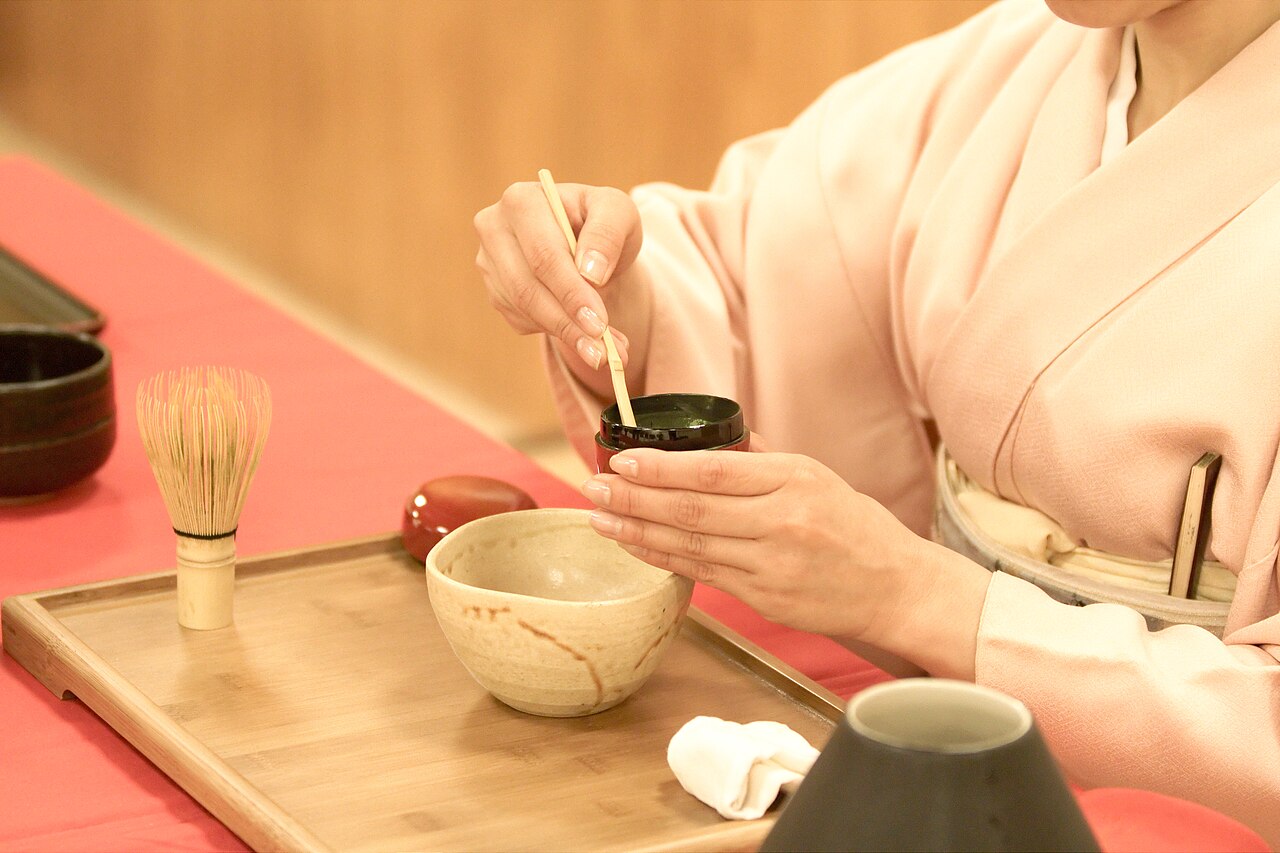
In Japan you can enjoy a cup of tea or you can immerse yourself in Japan’s Way of Tea, a ritualistic tradition that focuses on the way green tea is prepared and presented. Tea was introduced to Japan from China during the early Heian period (794–1185), becoming more widespread from the 12th century onward. China, it is said, had already been brewing tea for 1000 years by that time.
Buddhist monks who had gone to China to study began arriving home with tea seeds to cultivate in the gardens of their monasteries. The practice at the time was to grind the leaves into powder with a mortar and whip the powder into a potable beverage with a whisk. Emperor Saga is said to have encouraged tea cultivation after being served tea by Buddhist monks in 815. Tea remained primarily a monastic practice until it regained popularity among the warrior and aristocratic classes during the Kamakura period.
The beverage made its reappearance in religious rituals in the Buddhist monasteries where it was believed tea consumption enabled priests to remain alert during long sessions of prayer and meditation without exciting the body. It is this link between Buddhist spiritual practices and tea drinking that spawned the elaborate choreography of today’s tea ceremony.
The first thing to know about Japanese tea ceremonies is that there are two seasons, one encompassing the colder months of winter and the other the warmer months of summer. Each has its own peculiar equipment and utensils, both critical to the presentation as they are employed in precise sequence. A big part of a tea ceremony is admiring the craftsmanship of the various bowls, kettles and utensils. The host’s clothing and choice of kimono often reflect the season and formality of the gathering.
There are also different types of tea ceremonies in Japan, an informal gathering known as “chakai” and a formal affair called “chaji.” A chakai is a relatively informal tea gathering that typically features thin tea (usucha) and may include sweets or light refreshments. This is the Japanese tea ceremony most often experienced by visitors.
If you receive an invitation to a chaji, normally for groups of four or five, you are in for a full-blown ceremony that will last up to four or more hours. A chaji is the most formal form of tea gathering, combining a meal, sweets, and both thick and thin tea in a carefully choreographed sequence intended to foster harmony, respect, purity, and tranquility.
In Kobe the widest exposure to tea ceremonies occurs at Zuihoji Temple Park in early November. The popular outdoor chakai started in 1950 to remember 16th century military leader Toyotomi Hideyoshi who often traveled the country with his tea master, Sen no Rikyu. Hideyoshi was said to favour this particular spot at Arima Onsen. The Arima Grand Tea Ceremony is timed to coincide with the spectacular autumn foliage of thousands of maple and ginkgo trees that are blazing with colours that complement the beauty of the rituals of the Way of Tea.
Another good tea ceremony venue is the Sorakuen Garden in Kobe city. Renowned as one of the most beautiful gardens in Japan, it features guided tours with a matcha ceremony in the tea house at the center of the garden. Participants can learn about and experience the elegance and cultural significance of tea ceremonies.
Georges Seguin (Okki), CC BY-SA 3.0, via Wikimedia Commons


